

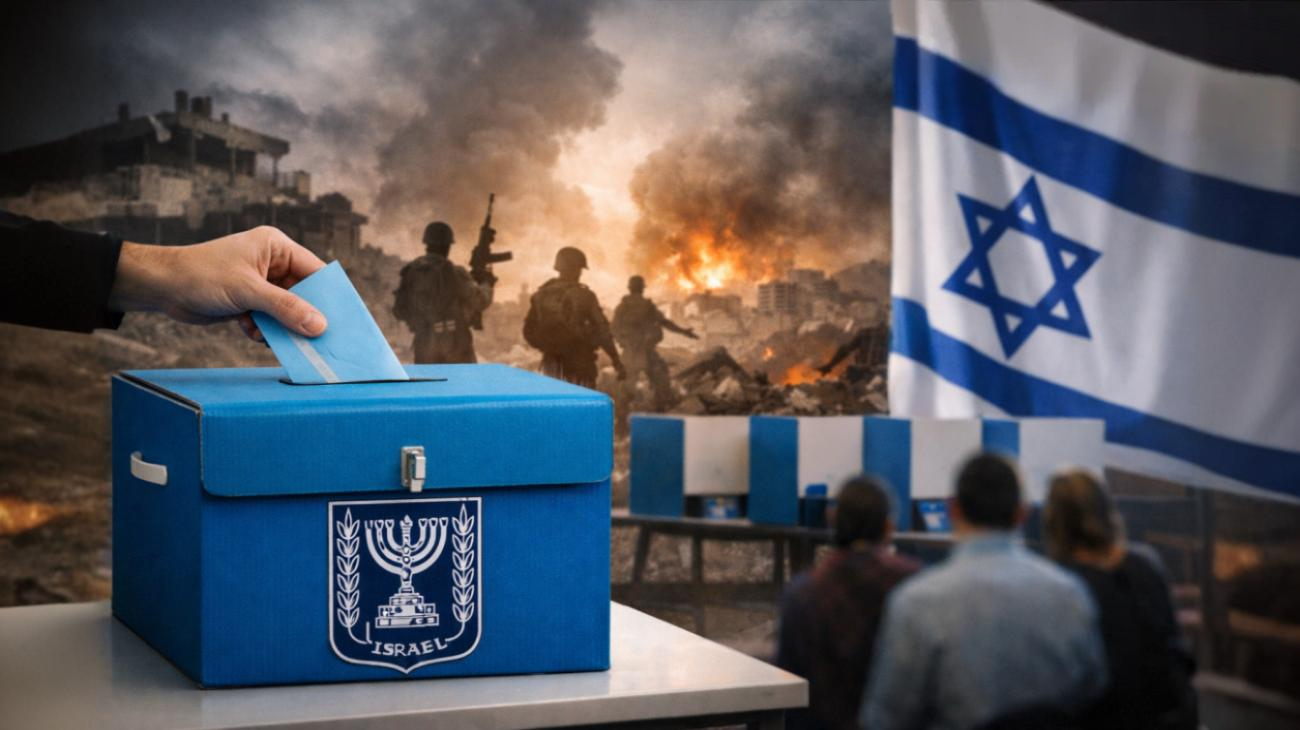
Upcoming elections, budget crisis, and political divisions may decide Israel’s leadership, governance, and social balance for years to come.
As January 2026 begins, the situation in Israel feels very serious and heavy. This year is not like normal political years. Many people believe that what happens in the 2026 elections will decide not only who will rule Israel, but also how the country will work in the future and how the government and people will treat each other.
According to the law, Israel’s parliamentary elections are planned for autumn 2026. But there is an important condition. If the Israeli parliament (called the Knesset) does not approve the 2026 national budget by 31 March, then the government will automatically end. The government recently sent the budget to the Knesset, but it was two months late, which breaks the law. Because of this delay, many people think the budget may not pass.
In the second half of 2025, there were many talks about holding early elections. However, Prime Minister Benjamin Netanyahu did not want early elections. He believed it was better to wait. Even though his party, Likud, has become stronger in opinion polls, Netanyahu still does not have enough support to form a government with his current allies, such as ultra-orthodox and far-right parties. To form a government, he needs 61 seats, but reaching this number seems very difficult because many people are tired of politics and the population is changing.

“Israel’s 2026 elections are shaping up to be more than a political contest, they are a referendum on trust, equality, and accountability.”
Before the autumn elections, many politicians will try to increase their influence. Some of them want to replace Netanyahu, while others hope to become important partners in the next government. One of them is Benny Gantz. He left Netanyahu’s war cabinet in June 2024. Many people once saw him as a strong leader from the centre. He has said that he will not block Netanyahu, but it is not clear if he is willing to help him stay in power. Right now, Gantz’s party, Blue and White, has very low support and may not even win a seat in parliament.
Another important figure is Naftali Bennett, a former prime minister. He is seen as a surprise factor in politics. Bennett has not clearly said whether he will or will not work with Netanyahu. Because of this, he keeps support from right-wing voters while also showing himself as a calm and practical option compared to the current political mess. This mess includes plans for judicial changes, strict laws like the death penalty for terrorists, and ongoing budget problems.

One very sensitive issue in Israeli politics is the role of Arab parties. This is often called the “Arab card.” In 2022, a government led by Bennett and Yair Lapid included support from an Arab Islamist party called Ra’am, led by Mansour Abbas. This showed that Arab parties could help form a government. New polls show that Ra’am could win five seats in the next election, making it very important again.
In the past, Netanyahu’s Likud party strongly criticised cooperation with Ra’am. Today, such cooperation would be even more controversial. Benny Gantz’s party is now openly against working with Ra’am because they fear losing support from centre-right voters. However, without Ra’am, it seems almost impossible for the opposition to reach the needed 61 seats. Many people quietly believe that if Netanyahu is just a few seats short, he would quickly work with Ra’am to stay in power, even if it goes against his earlier statements.
When it comes to foreign relations and the military, the situation has changed a lot because of pressure from the United States. The conflicts that started on 7 October 2023 are still dangerous, but they are now more controlled. In Gaza, the situation is no longer shaped by Netanyahu’s promise of “total victory.” Instead, it is influenced by US President Donald Trump’s peace plan, which includes countries like Qatar and Turkey.
In northern Israel, the Israeli army continues small attacks against Hezbollah, but a full war seems unlikely for now. In Syria, Israeli military actions have been reduced because of agreements supported by the US. In Yemen, the Houthis have become weaker after strong air attacks. Iran could still cause problems in 2026, especially if there is a major change in its government.

Because things are calmer in the region, Netanyahu’s government is trying to show strength in another way. The West Bank has become the main focus. The US government has said very little, even though violence by settlers has increased and new settlements are being built quickly. Far-right groups in the government want to gain more control in the West Bank because there was no clear victory in Gaza.
Must Read: Fear and Worry Grip Iranians Living Abroad Amid Unrest Back Home
Most major Israeli political parties agree on one thing: they do not support the creation of a Palestinian state right now. Even though the West Bank gets a lot of attention, it is unlikely to decide the 2026 election.
“The budget delay and coalition instability have turned routine elections into a defining moment for Israel’s democracy.”
Instead, two other issues are much more important. The first issue is military service. Netanyahu’s government wants to pass a law that would allow many ultra-orthodox Jewish men to avoid joining the army. Many Israelis are very angry about this. They are tired after years of war and reserve duty. Around 80,000 young ultra-orthodox men do not serve in the army, and many people think this is unfair. The army itself says it does not have enough soldiers, and now the public is finally listening.
If Netanyahu pushes this law, it could seriously damage his popularity. Many people see it as unfair that some groups are protected while others must fight and sacrifice.
The second major issue is responsibility for the 7 October 2023 attacks. Netanyahu wants a political investigation instead of an independent state investigation, which the law requires. Many Israelis do not trust this idea. They think it is an attempt to protect politicians instead of finding the truth. Although Netanyahu has had some success in delaying a full investigation, public anger remains strong.
“Military service, national security failures, and social fairness are likely to dominate voter decisions more than foreign policy.”
Because of all this, the 2026 elections are likely to be a vote on two big things: what went wrong on 7 October and whether Israeli society is becoming more unequal. The opposition plans to keep talking about security failures, how the government handled national pain, and the unfair military draft system.
In Israel, every single vote matters. Small changes in turnout or even foreign influence could decide the result. As the country moves toward the elections, it is clear that this is not just about choosing a prime minister. It is about deciding the future values of the country and the trust between the people and the state. Nothing is guaranteed, and everything is very close.
Do Follow Us on Facebook: Kafalat News Official